

Wall ball
A beginner guide to wall ball: holding the medicine ball, squatting to depth, throwing to the target, catching into the next rep, faults and scaling options.
What the wall ball is
The wall ball is a combination movement where you hold a medicine ball at your chest, squat to full depth, then drive up and throw the ball to a target on a wall, catching it to start the next rep. It trains legs, shoulders, coordination and conditioning together. Beginners start with a light ball and a lower target.
Why it is in class
The wall ball is a CrossFit favorite because it takes a squat, adds a throw, and turns the combination into a rhythm you can keep going for many reps. It is simple to learn, easy to scale and very effective for conditioning. The throw teaches you to use your legs to send an object upward, while the catch trains you to absorb a load and flow straight into a squat. In everyday life it shows up in tossing a bag of laundry up a staircase, throwing a ball for kids in the backyard, or catching something heavy someone hands you and lowering it under control. It also builds the leg endurance that makes getting up and down from the floor feel easy.
Points of performance
What a good rep looks like, from setup to finish.
Hold the ball high
Face the wall about an arm's length away. Hold the ball at the chest with hands underneath and to the sides, elbows tucked down and in. Feet about shoulder width, toes slightly out. Keep the ball close to your body, not out in front.
Squat to full depth
Sit the hips back and down with the chest tall until the hip crease drops below the top of the knees, the standard depth. Keep the heels down and knees tracking over the toes. The ball stays at the chest the whole way.
Drive and release
Stand up fast and use that drive to send the ball up. As the legs finish, extend the arms and push the ball toward the target, releasing it at the top. The power comes from the legs, the arms aim and finish.
Hit the target
Aim for the center of the target line or circle on the wall, a little above it. In a standard workout the ball must strike at or above the target for the rep to count. Keep your eyes on the target while you throw.
Catch into the next rep
Catch the ball at chest height with elbows soft and immediately ride it down into the next squat. This turns each catch into the start of the next rep. If you need a break, rest standing tall with the ball held at your chest.
Common beginner faults, and the fix
Shallow squat
What it looks likeThe hips stop above the knees, especially late in a set, so the rep does not meet standard.
The fixSquat to a box or a second medicine ball as a depth target while learning. Lighten the ball if depth breaks down.
Throwing with the arms only
What it looks likeThe lifter stands up, then pushes the ball from the chest like a chest pass, and the shoulders burn out quickly.
The fixMake the stand and the throw one motion. Cue: the legs throw the ball, the arms only aim.
Standing too far from the wall
What it looks likeThe ball travels on a forward arc and comes back low, pulling the lifter forward onto the toes.
The fixStand closer, about an arm's length away, and throw up rather than out.
Catching with straight arms
What it looks likeThe ball hits stiff arms and bounces away, or the lifter catches then pauses before squatting.
The fixReach up with soft elbows and let the ball drop into your chest as you start the squat.
Where you start, and where it goes
Every movement in class has a version that fits you today.
Start here
Air squats with an empty hand throw, then a light medicine ball thrown to a lower target.
Next step when: You can do 10 reps with full squat depth and a consistent throw to the target.
Building
A light ball to a lower target in short sets, building a steady catch and squat rhythm.
Next step when: You hit depth and the target on nearly every rep and can catch smoothly into the next squat.
Full movement
Wall balls at the ball weight and target height your coach sets for you, in workout sized sets.
Next step when: You can keep depth and accuracy through larger sets and recover quickly between them.
Beyond
Heavier balls, higher targets and long sets inside demanding workouts.
Next step when: Your coach programs it and your squat stays at standard depth when you are tired.
Wall ball in real classes
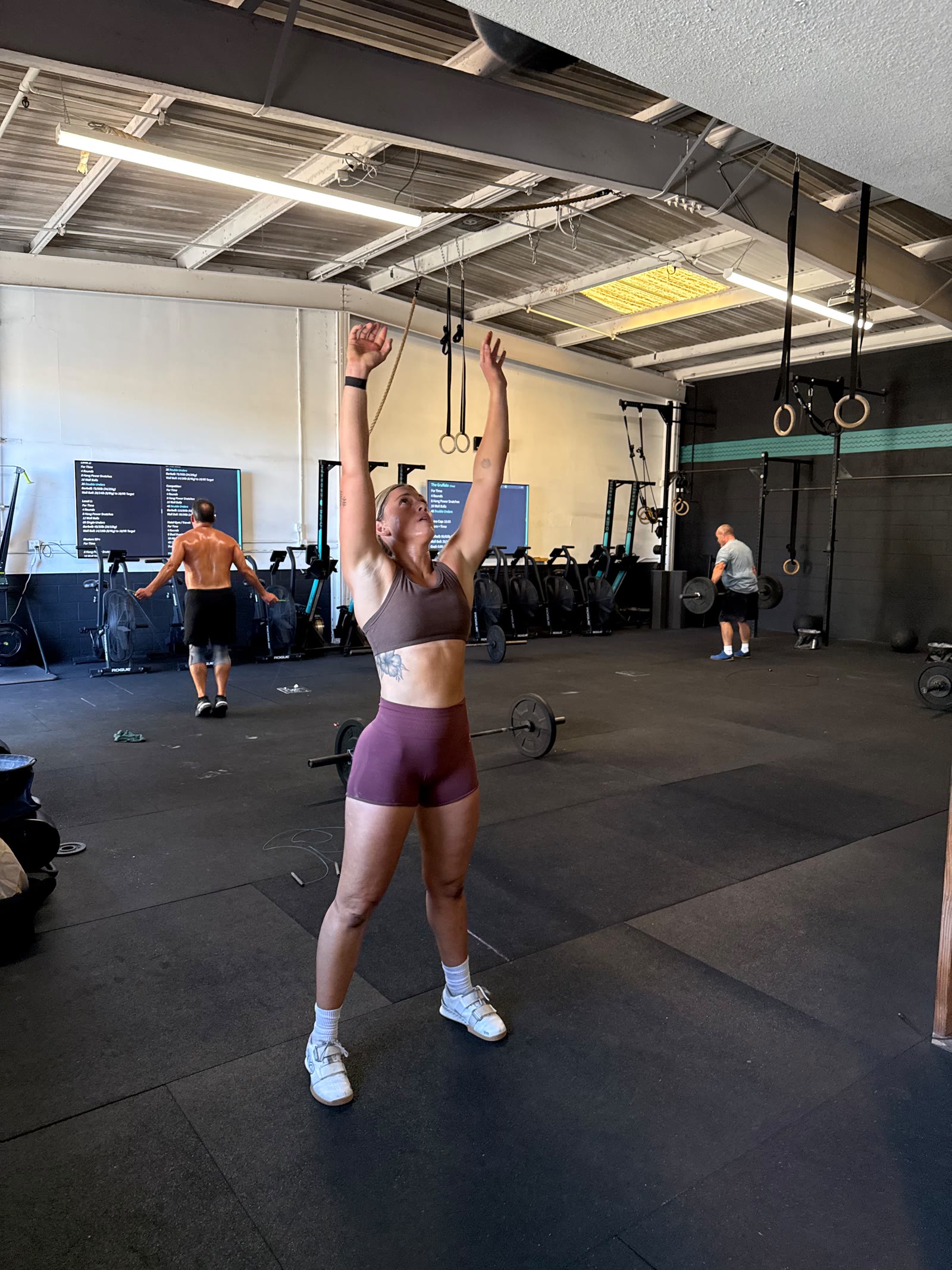
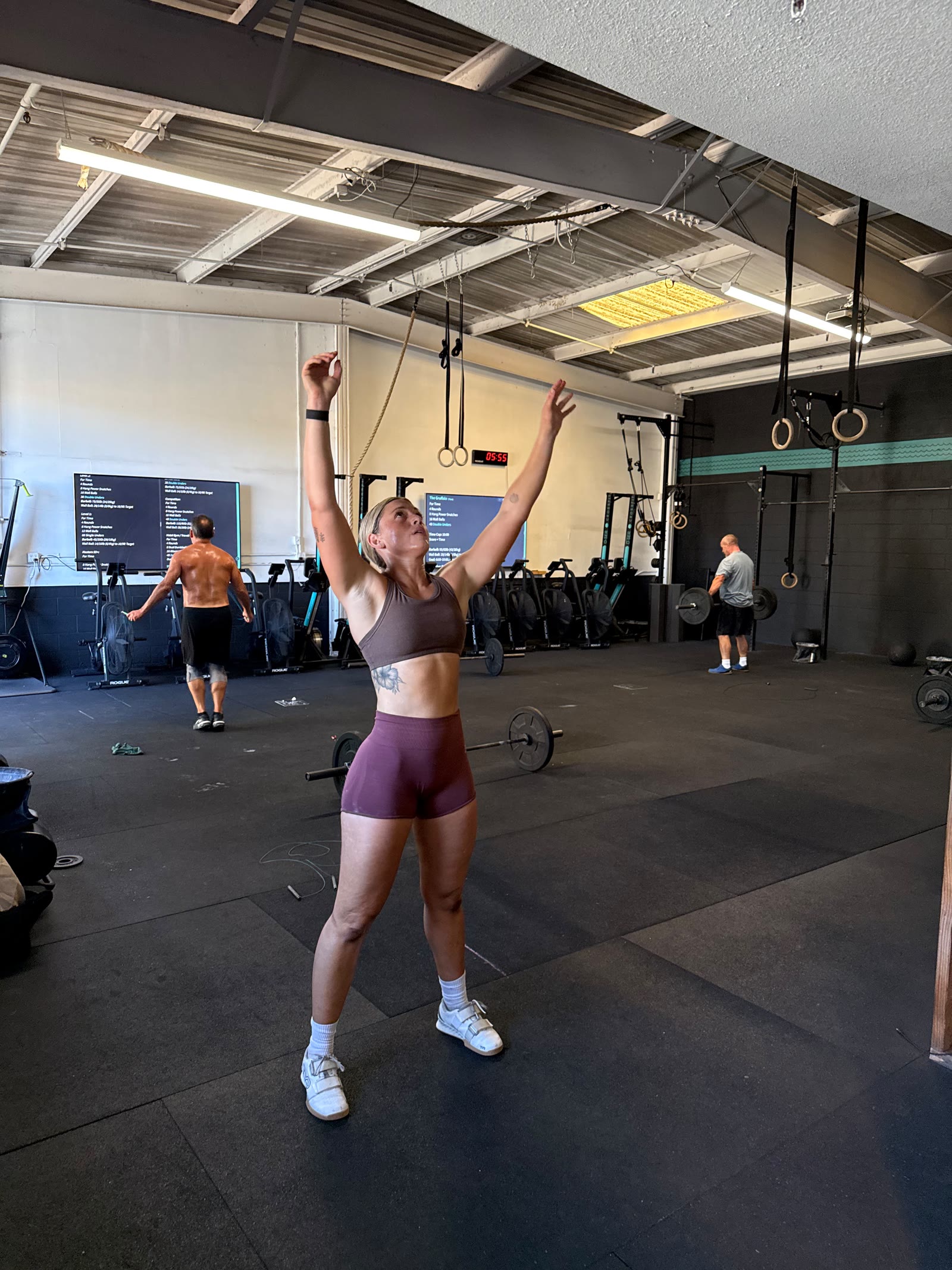
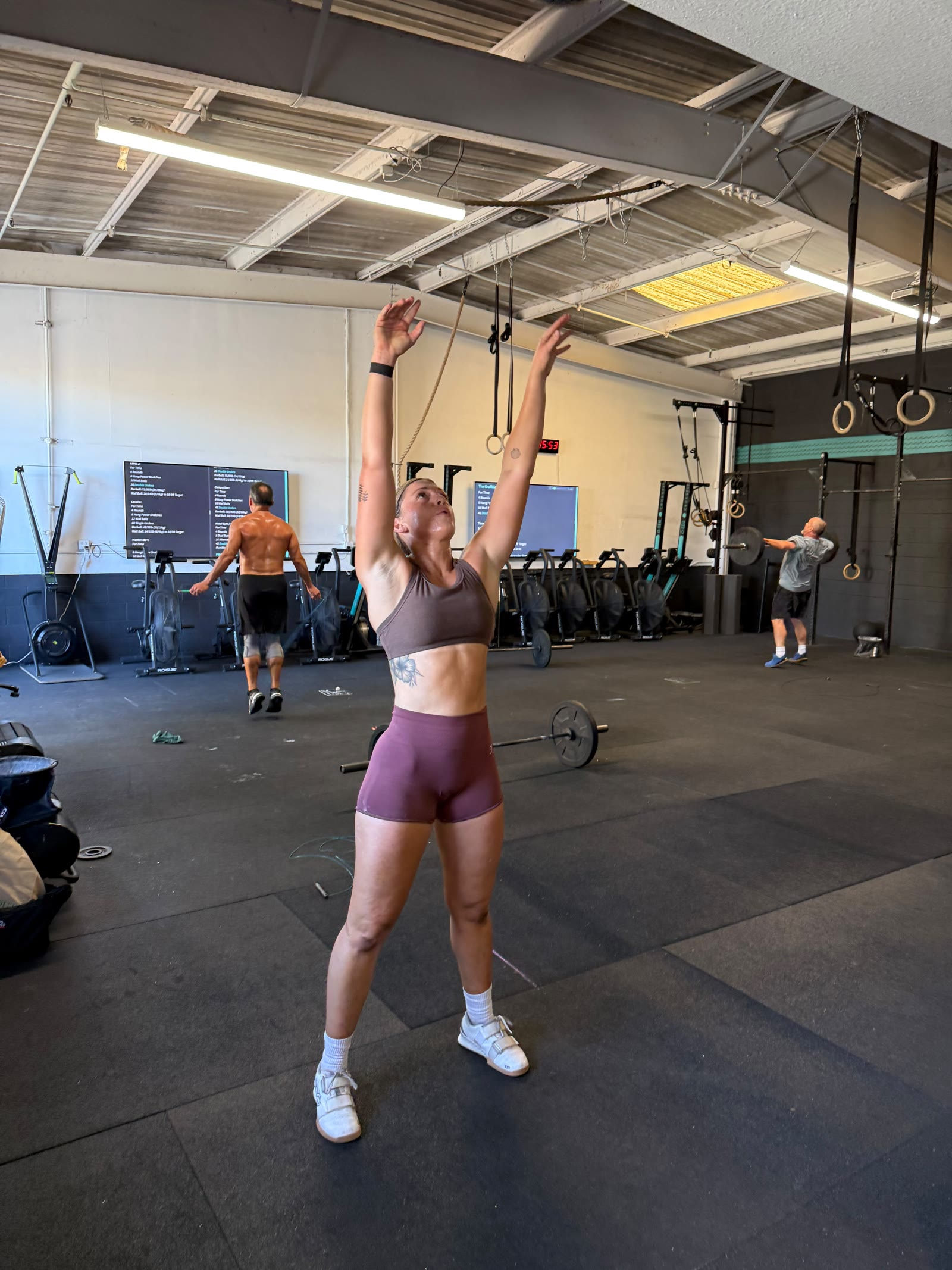
3 photos from the gym floor in San Clemente, shared by our coaches and members.
Learning it in your first classes
Wall balls are often one of the first conditioning movements a beginner meets, because they are easy to learn and easy to scale. Your coach will choose a ball weight and a target height that fit you, and will ask you to practice the squat and the throw separately before putting them together. In class they watch your squat depth, whether your legs drive the throw, and where you stand in relation to the wall. It may feel awkward to catch and squat in one motion at first; the rhythm comes quickly. Tell the coach about knee, hip, back or shoulder history before you start. If anything hurts rather than just tiring you, stop and tell them, and see a doctor or physical therapist if it continues.
What your first class at O-SEA CrossFit is like · How On-Ramp teaches the movements
Questions beginners ask
How heavy is a wall ball for a beginner?
A beginner wall ball should be light enough that you can keep full squat depth and reach the target on nearly every rep. Your coach picks the ball and target for you. Starting light and building up is normal, and medicine balls come in small enough increments that you can progress gradually as your squat and stamina improve.
What counts as a rep in wall ball?
In a standard wall ball rep, the hip crease drops below the top of the knee in the squat, and the ball strikes the wall at or above the target. If the ball drops before you catch it, you pick it up and continue. Your coach will show you the target and the depth standard in class.
Why do my shoulders get tired so fast doing wall balls?
Shoulders tiring quickly in wall ball usually means the arms are doing the throw instead of the legs. Stand up fast and let that drive send the ball up, with the arms only guiding it. Standing closer to the wall and throwing straight up also takes pressure off the shoulders.
Where should I rest during wall ball sets?
During a wall ball set, rest standing tall with the ball held at your chest, or set it down for a few breaths. Resting in the bottom of the squat tires the legs. Many people break wall balls into planned smaller sets from the start, which keeps the reps steady and the squat at full depth.
Can I do wall ball if I cannot squat to full depth?
Yes. If full depth is not there yet, your coach can give you a box or a target to squat to, and a lighter ball, while you build mobility and strength. Wall ball is very adjustable. Tell the coach about any knee, hip or back history, and check with a doctor or physical therapist if squatting is painful.
Related movements
Learn the wall ball with a coach beside you
Every class at O-SEA CrossFit is coached and every movement scales. Your first one is free.