
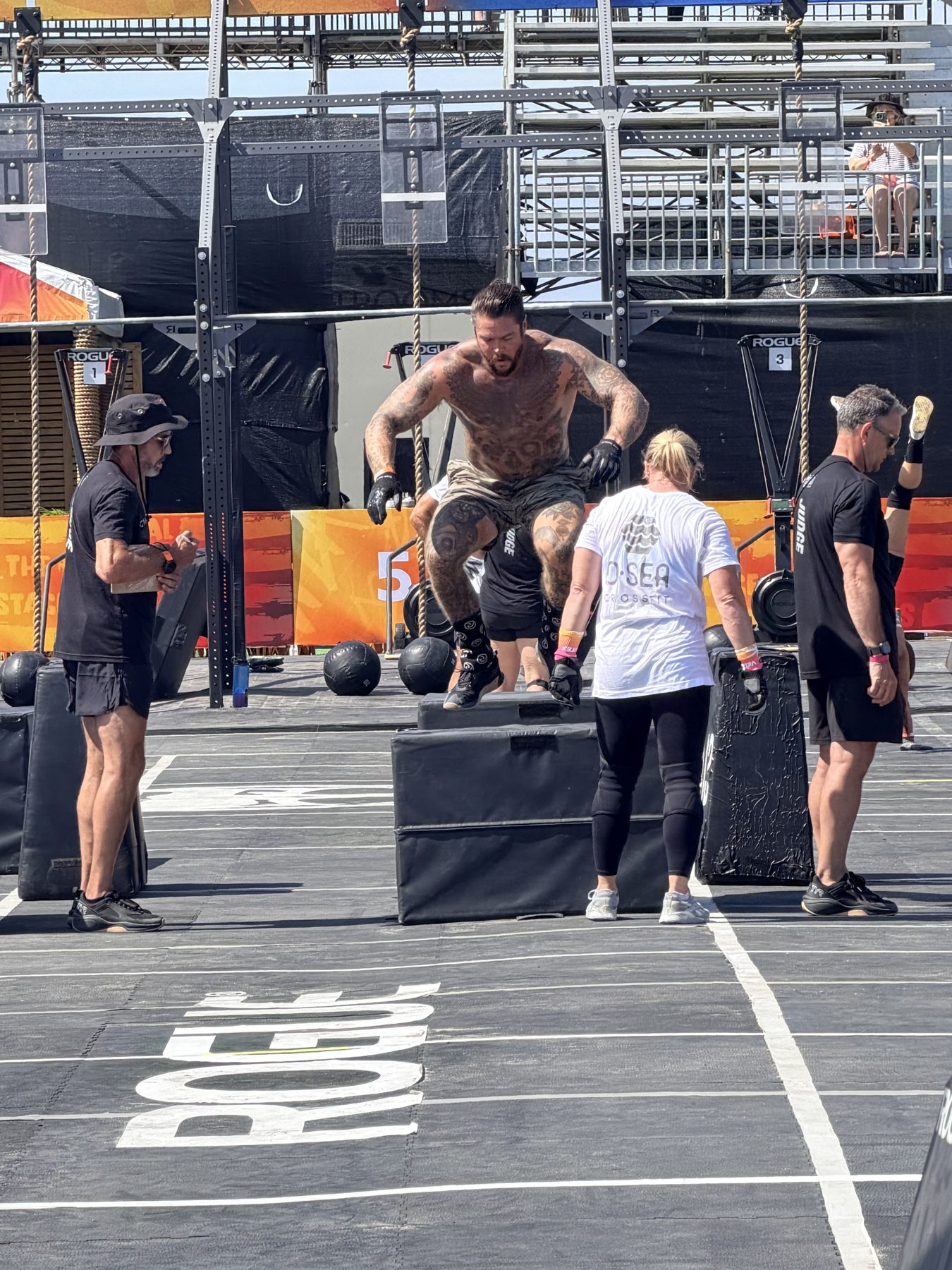
Burpee
Learn the burpee step by step: getting to the floor, chest down, standing back up, pacing, the faults beginners make, and the step-back and incline options.
What the burpee is
A burpee is a full body conditioning movement where you drop your chest to the floor, push back up, get your feet under you and stand with a small jump and a clap overhead. It trains the heart and lungs, the legs, the chest and the ability to get down and up efficiently. Beginners start with step-back or elevated burpees at a steady pace.
Why it is in class
The burpee is in CrossFit because it combines a push-up, a squat and a jump into one simple, repeatable movement that drives the heart rate up fast with no equipment. It shows up in warm-ups, in short workouts and in partner games, so every athlete meets it early. More importantly, the burpee trains the skill of getting down to the ground and back up again. That ability matters for adults of every age, whether you are playing on the floor with children, working in the garden, getting up after a fall or simply rising off a beach towel without a hand from anyone.
Points of performance
What a good rep looks like, from setup to finish.
Hands down wide
From standing, squat and place the hands on the floor about shoulder width apart, just in front of the feet. Put the hands down rather than diving or flopping. A controlled start sets up the rest of the rep and spares the wrists and lower back.
Feet back to a plank
Jump or step the feet back so you land in a plank on your hands and toes. Keep the stomach tight as the feet land. Landing with the hips sagging puts extra stress on the lower back and makes the next step harder.
Chest and thighs to the floor
Lower the chest and thighs to the floor. In a standard burpee the chest touches the ground, and unlike a strict push-up you can get there any way that works. Many athletes drop to the floor and push back up in two quick motions.
Feet under the hips
Push up off the floor and jump or step the feet forward so they land flat, close to the hands, in a squat. Feet landing under the hips, not far behind, make standing up much easier. Hip mobility helps here, so stance width can vary.
Stand, jump, clap
Stand up fully, then take a small jump and clap the hands overhead, the common standard. The hips open all the way at the top. Land softly with bent knees and move straight into the next rep with a steady, repeatable rhythm.
Common beginner faults, and the fix
Going too fast early
What it looks likeThe athlete sprints the first reps, then stalls and stands still for long rests later.
The fixPick a pace you could hold for the whole set and breathe on every rep, like a steady jog.
Feet landing far back
What it looks likeAfter the push off the floor, the feet land far behind the hands and the athlete struggles to stand.
The fixDrive the hips up as you jump the feet in, or step one foot at a time closer to the hands.
Sagging hips on landing
What it looks likeThe feet hit the plank and the lower back arches hard.
The fixBrace the stomach before the feet go back, or step back one leg at a time.
Incomplete top
What it looks likeThe athlete never fully stands and the hips stay bent before going back down.
The fixSqueeze the glutes at the top, open the hips all the way and clap overhead each rep.
Where you start, and where it goes
Every movement in class has a version that fits you today.
Start here
Step-back burpees with the hands on a box or bench, stepping one foot back and forward at a time, no jump.
Next step when: When you can complete sets of ten elevated step-back burpees at a steady pace without long rests.
Building
Step-back burpees from the floor, lowering the chest to the floor with control and stepping the feet back in.
Next step when: When floor burpees feel steady and you can hold a pace through a short workout.
Full movement
Full burpees with the chest and thighs to the floor, jumping the feet in and standing tall with a small jump and clap.
Next step when: When you can pace a high rep set without breaking down, try the variations used in workouts.
Beyond
Bar-facing burpees, burpee box jumps, burpee pull-ups, and burpees over a rower or line.
Next step when: Add these as your conditioning grows, and keep the landing and standing mechanics clean as fatigue builds.
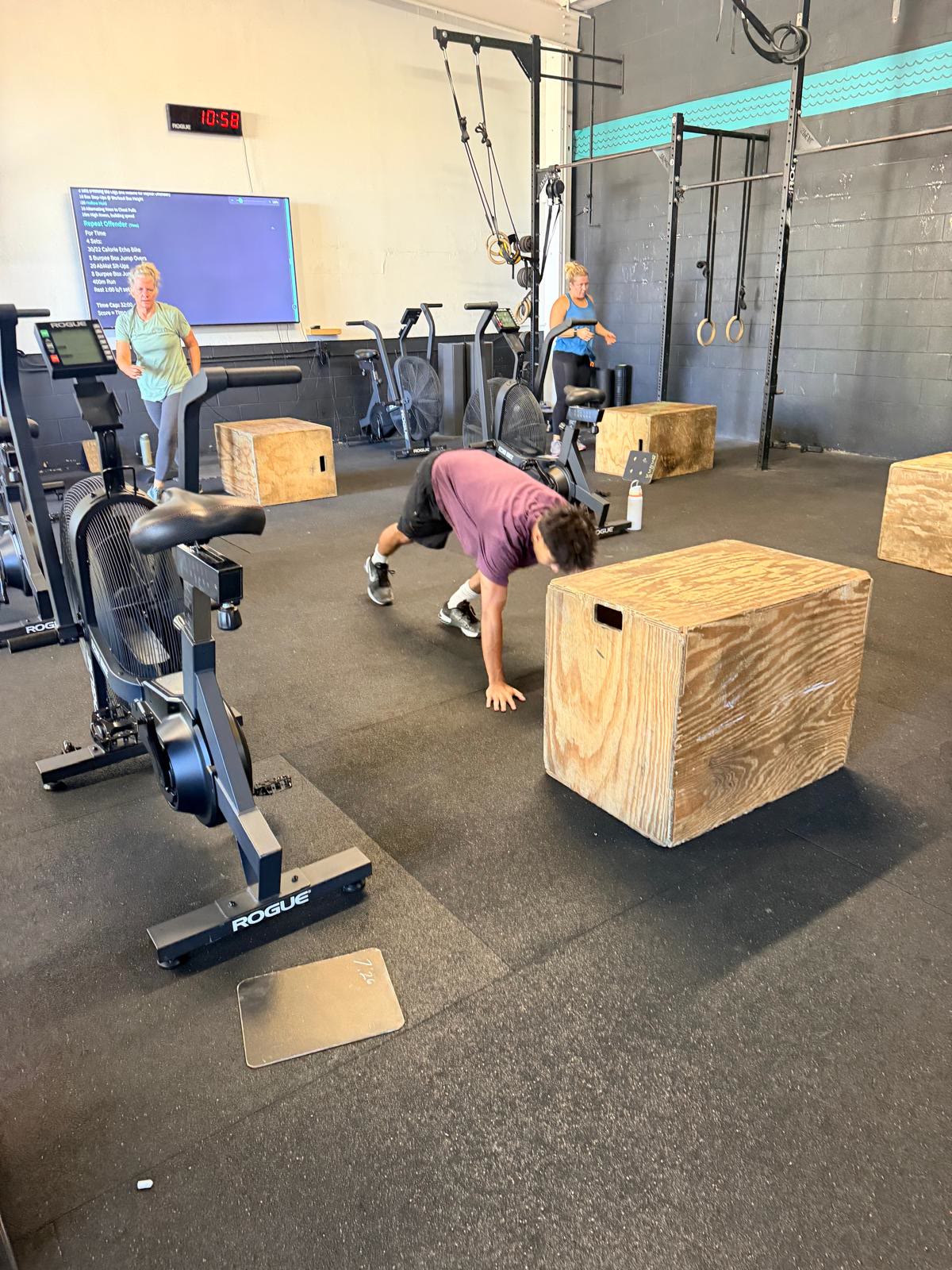
Burpee in real classes
1 photo from the gym floor in San Clemente, shared by our coaches and members.
Learning it in your first classes
Burpees often show up in the warm-up of your very first class, so you will likely meet them on day one. Your coach will show you the parts separately: getting to the floor, landing in a plank, getting the feet back under you and standing up. They watch how you get down, whether your back sags and how you breathe. Expect a scaled version, like stepping instead of jumping, until the pattern feels natural. Tell the coach about any knee, wrist, shoulder or back issues, and let them know if getting up and down from the floor feels difficult or makes you dizzy.
What your first class at O-SEA CrossFit is like · How On-Ramp teaches the movements
Questions beginners ask
Why do burpees feel so hard?
Burpees feel hard because they use nearly every muscle in the body and move you from standing to lying down and back up again in seconds. That drives the heart rate up quickly. Pacing changes everything: a slow, steady burpee you can sustain beats fast reps followed by long rests.
Do I have to jump in a burpee?
No. Beginners can step back and step forward in a burpee instead of jumping, and many skip the jump at the top at first. Stepping keeps the burpee easier on the knees, wrists and lower back while still training the pattern of getting to the floor and back up. Your coach adds the jumps when you are ready.
Is it okay to drop to the floor instead of doing a push-up?
Yes. In most CrossFit workouts, a burpee does not require a strict push-up. You can lower your chest to the floor any way you like, including dropping to your knees first, and push back up in stages. The standard is chest and thighs touching the floor, then standing tall at the top.
How can I get better at burpees?
The best way to get better at burpees is to practice them regularly at a steady pace. Work on push-up strength, hip mobility for getting the feet under you, and breathing on every rep. Short sets with good form add up. Over time your pace improves and the burpee starts to feel like a rhythm.
Are burpees okay for people with bad knees?
Burpees can be scaled for people with knee concerns, for example by stepping instead of jumping and placing the hands on a box. Tell your coach about any knee history so they can pick the right burpee version, and check with a doctor or physical therapist if you have a current injury or ongoing knee pain.
Related movements
Learn the burpee with a coach beside you
Every class at O-SEA CrossFit is coached and every movement scales. Your first one is free.