
Rowing
Learn the rowing stroke as a beginner: setup on the rower, legs then body then arms, common faults, damper settings and pacing your first CrossFit rows.
What the rowing is
Rowing in CrossFit is done on an indoor rowing machine, where you drive with your legs, swing your body back, then pull the handle to your ribs in one connected stroke. It trains your heart and lungs, your legs and your back while staying low impact on the joints. A beginner starts by learning the order of the stroke at an easy pace before adding any intensity.
Why it is in class
Rowing earns its place in CrossFit because it works nearly the whole body at once without the pounding of running. Your legs supply most of the power, your trunk transfers it, and your arms finish the job, so a single stroke teaches the same hip drive you later use in a deadlift or a clean. It also lets coaches build conditioning in people of very different fitness levels side by side, since everyone sets their own pace. Outside the gym, the pattern shows up when you pull a stuck door open, start a lawn mower, haul a loaded wagon or pick a bag off the floor and stand tall. Better lungs make stairs, hikes and playing with kids feel easier.
Points of performance
What a good rep looks like, from setup to finish.
Set the feet
Strap your feet so the strap crosses the widest part of your shoe, near the ball of the foot. Your shins should be able to reach vertical at the front of the stroke. Feet set too high or too low make the drive feel weak and pull your heels off the footplate.
Start at the catch
Sit tall with arms straight, shoulders relaxed, and lean slightly forward from the hips as if you are about to stand. Shins are close to vertical and the handle sits just past your feet. This loaded position starts every stroke, so learn to find it without thinking.
Legs first
Push the footplate away hard while your arms stay long and your back holds its angle. The handle should travel with your body, not get yanked by your hands. Think of it as a jump lying down: the legs do the bulk of the work in every good stroke.
Swing, then pull
Once the legs are nearly straight, open your hips so your torso leans back slightly, roughly to an eleven o'clock position. Only then bend the elbows and draw the handle to the bottom of your ribs, wrists flat, elbows passing just behind your body.
Recover in reverse
Return in the opposite order: arms extend away first, then the body hinges forward, then the knees bend and you slide up the rail. Keep the recovery slower than the drive. A calm recovery gives you a breath and sets you up for a strong next stroke.
Common beginner faults, and the fix
Arms pull first
What it looks likeThe elbows bend the instant the stroke starts, so the handle jerks toward the chest while the legs are still bent and the seat barely moves.
The fixKeep the arms long like ropes during the leg drive. Your coach may have you row legs only for a few strokes to feel the order: legs, body, arms.
Knees come up early
What it looks likeOn the way back, the knees bend before the handle clears them, so the handle has to hop over the knees and the chain wobbles.
The fixHands away first, lean forward, then slide. Pause with arms out and torso leaning to rehearse a clean recovery path.
Rounding over at the catch
What it looks likeThe seat slides all the way to the heels and the back hunches to reach farther forward.
The fixStop the slide when the shins are vertical and reach with a long chest, not a rounded spine. Shorter and strong beats longer and collapsed.
Damper cranked to the top
What it looks likeThe fan lever is pushed to its highest number, every stroke feels like dragging a boat through mud, and the legs are fried within a minute.
The fixSet the damper in the middle of its range. Power comes from how hard you push, not from the lever. Your coach will show you where to set it.
Rushing the slide
What it looks likeThe seat shoots forward after each pull, the stroke rate climbs high, yet the monitor shows a slow pace.
The fixCount one on the drive and two or three on the recovery. Fewer, harder strokes usually move the monitor faster.
Where you start, and where it goes
Every movement in class has a version that fits you today.
Start here
Drills at an easy pace: legs-only strokes, then legs and body, then the full stroke, in short pieces of a few hundred meters with rest.
Next step when: You can row two easy minutes with the correct order every stroke and the handle never hops over your knees.
Building
Continuous rowing for several minutes at a conversational pace, plus short intervals where you push harder for 20 to 30 seconds and then recover.
Next step when: Your stroke holds together when you push, and you can stay at a steady pace without the stroke rate drifting high.
Full movement
Rowing as written in a class workout, for calories or meters, paired with other movements, at a pace you can hold for the whole piece.
Next step when: You finish workouts knowing your pace and can tell your coach the split you hold for a longer row.
Beyond
Longer efforts and hard sprints with a target pace, such as repeated short sprints or a long steady row at a planned stroke rate.
Next step when: This rung keeps going: you refine pacing, test a benchmark distance and chase steadier splits over months.
Rowing in real classes
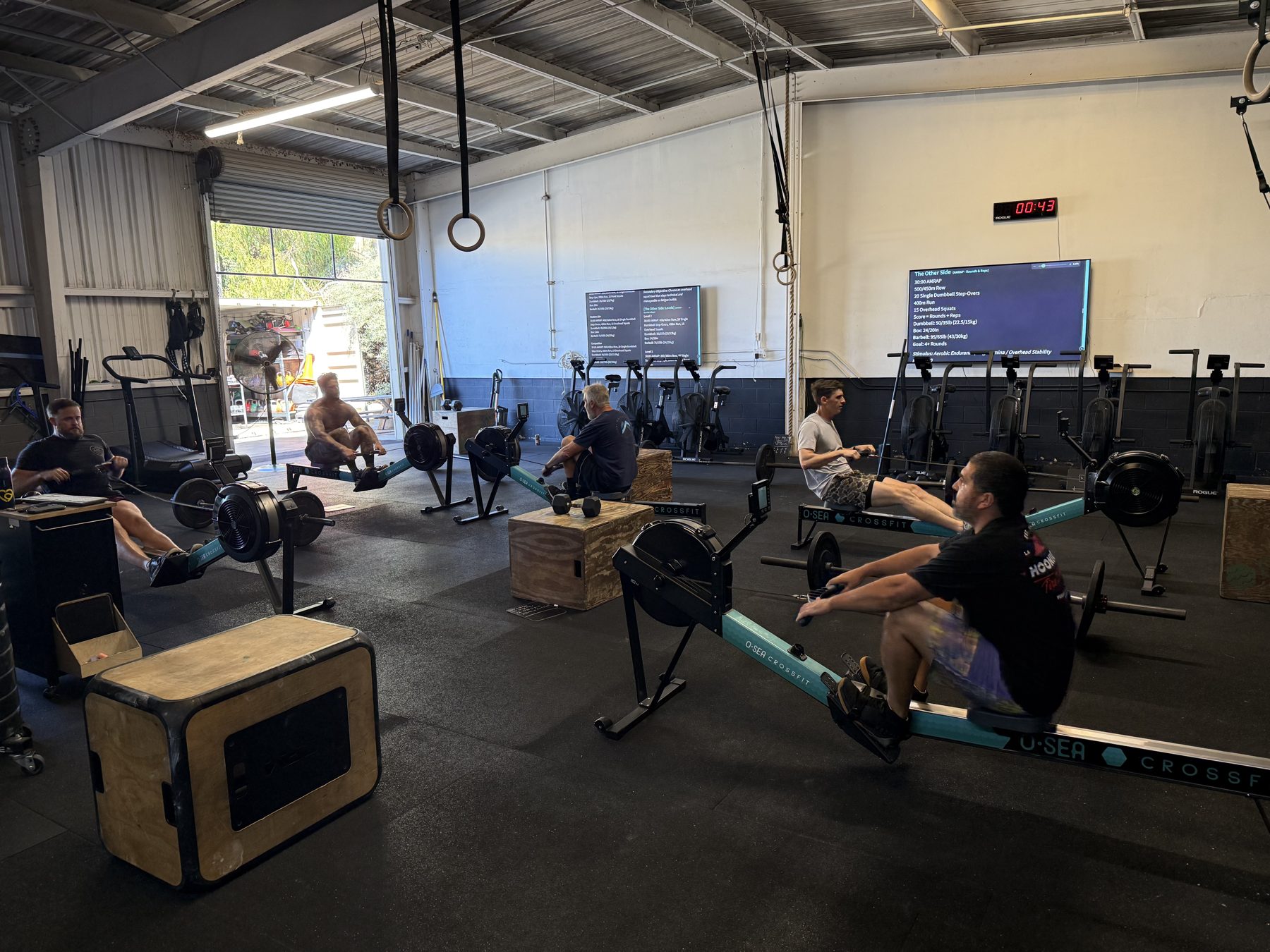
1 video and 5 photos from the gym floor in San Clemente, shared by our coaches and members.
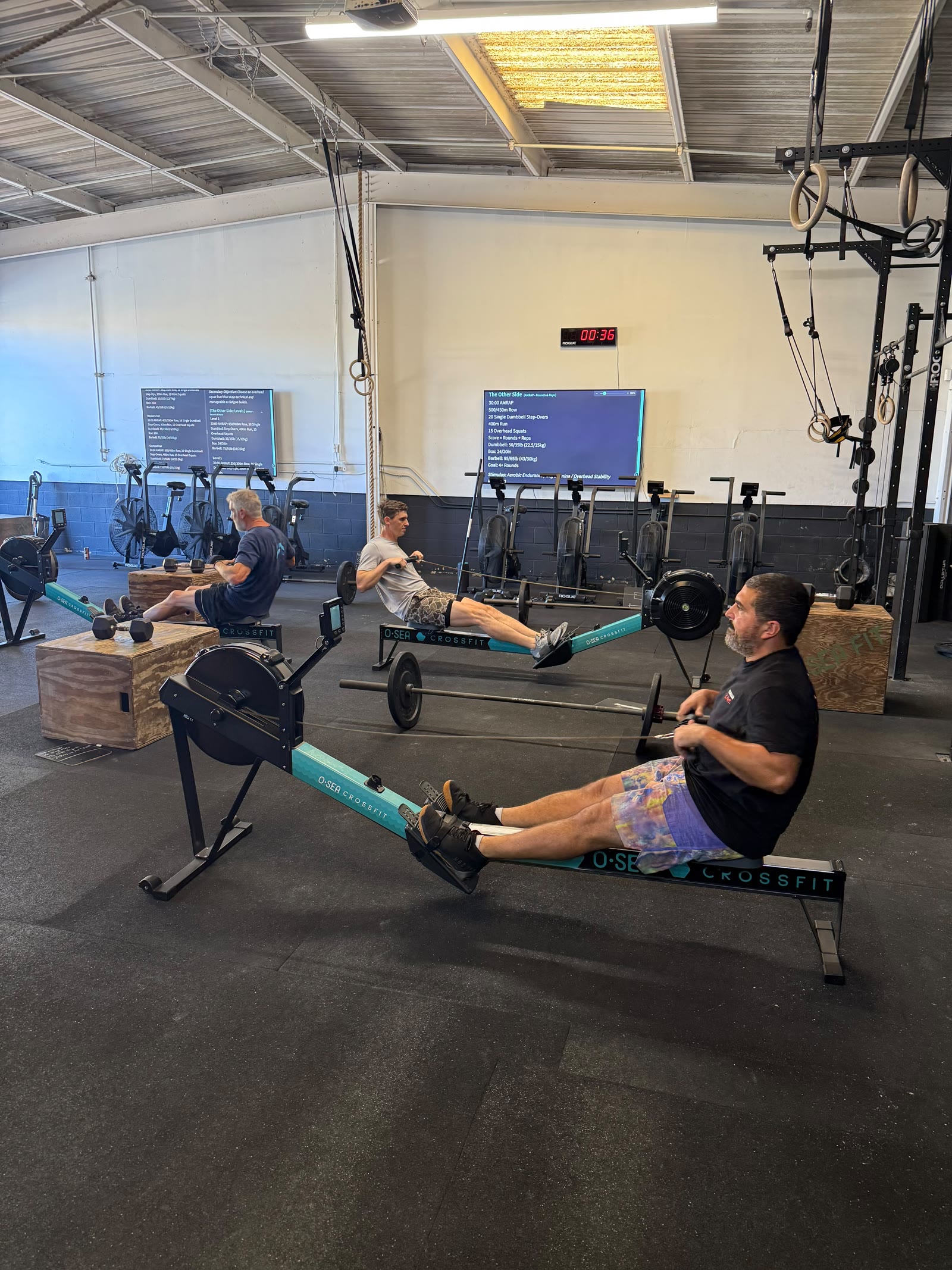
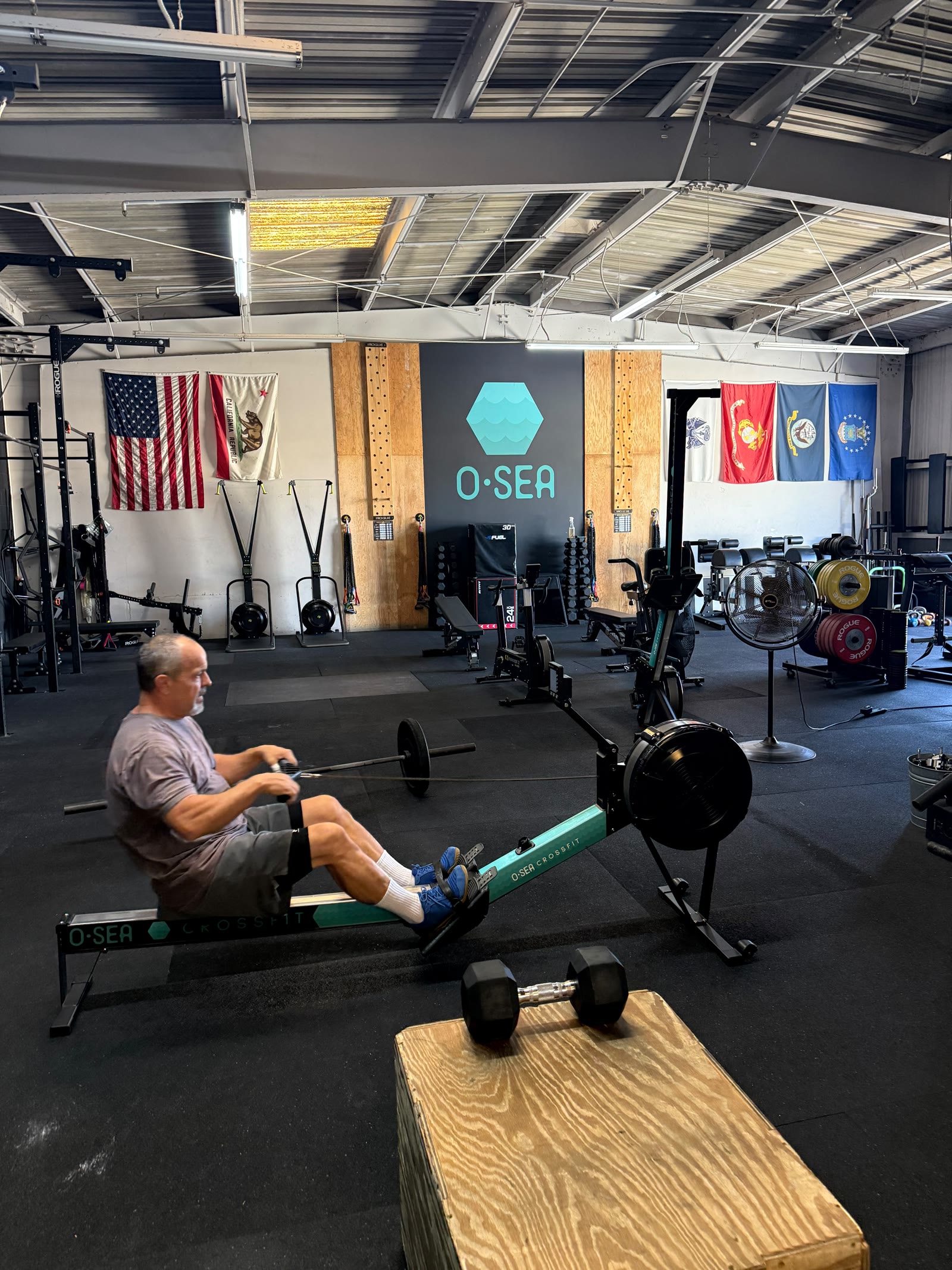
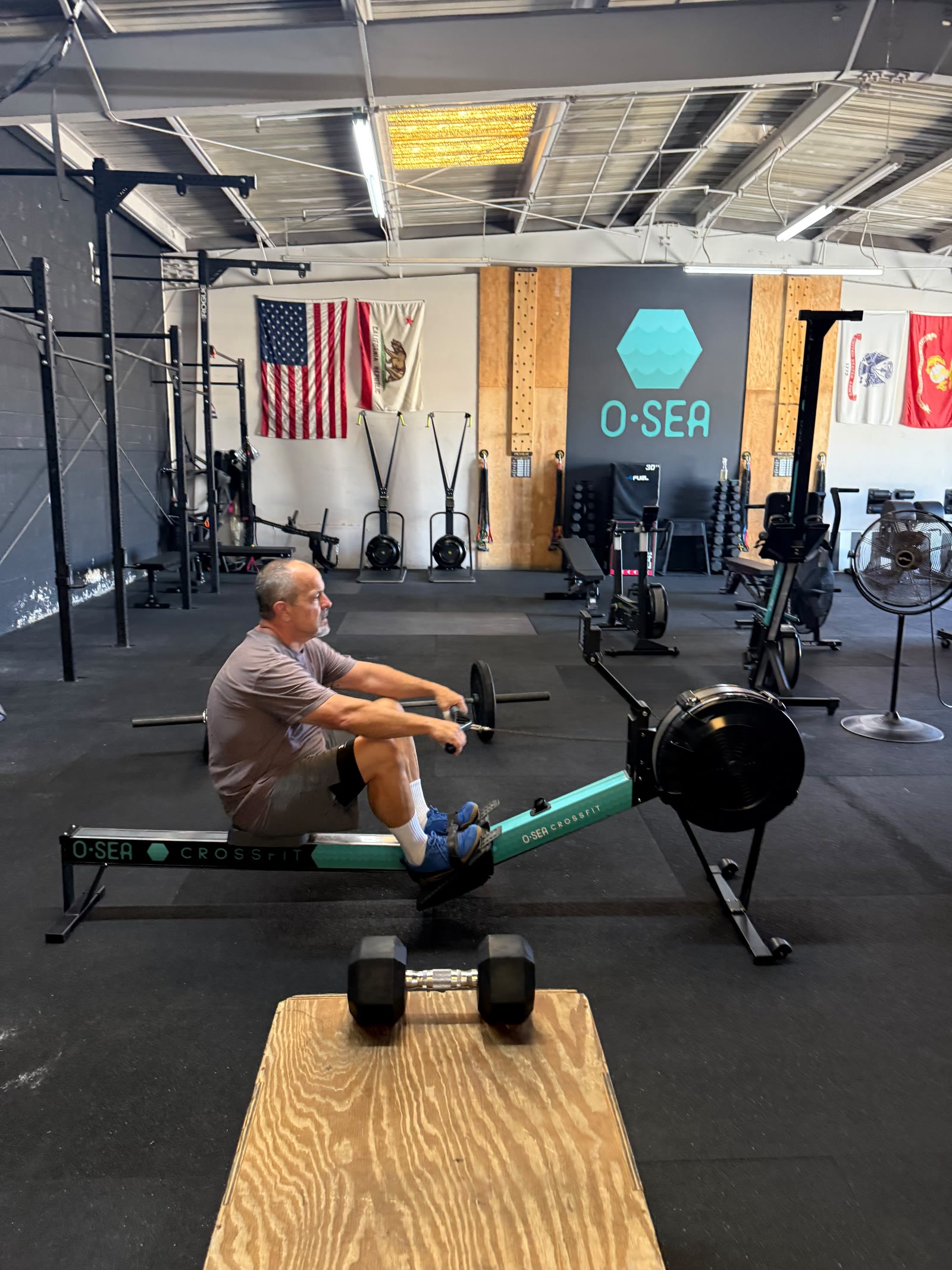
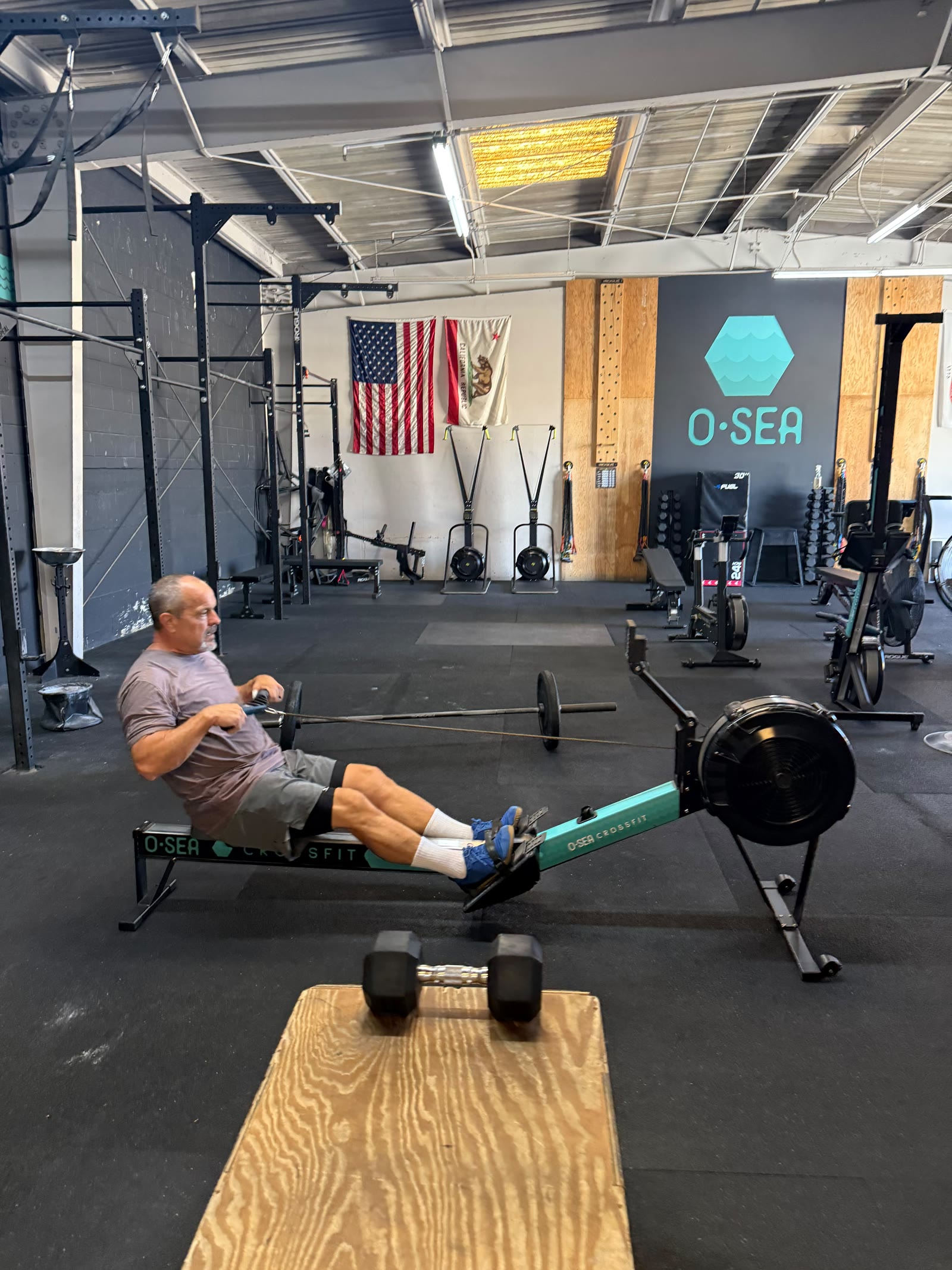
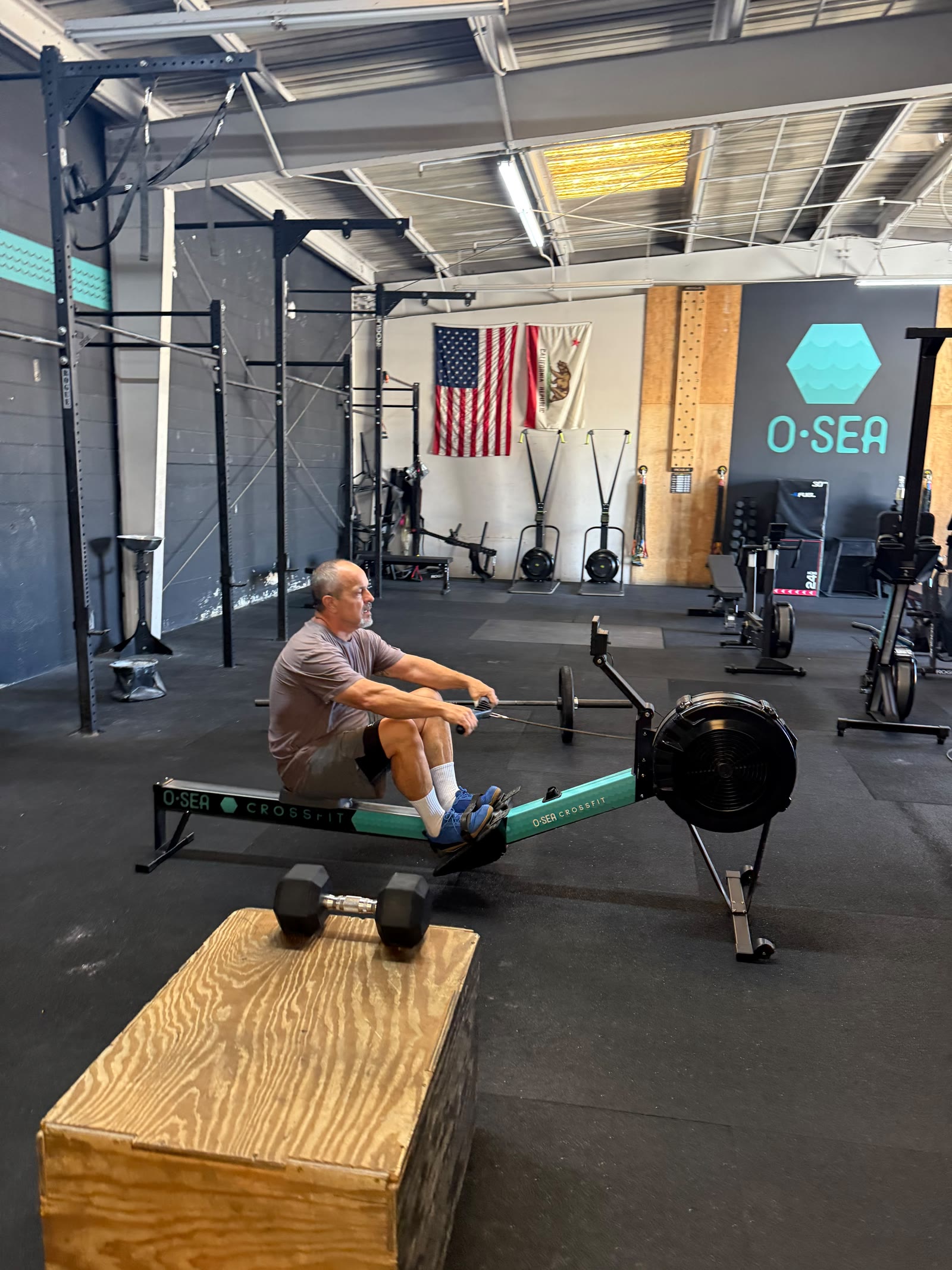
Learning it in your first classes
In your first coached class the coach will usually walk you through the rower before the workout: strapping in, setting the damper and reading the monitor. Expect to row slowly for a few minutes while the coach watches the order of your stroke, the angle of your back at the catch and whether your arms are pulling early. You may be asked to row legs only, then add the body, then the arms. Tell your coach about any low back, hip or knee history before you start so they can adjust the setup or swap the movement. If something pinches, stop and say so. Nobody expects a fast time on day one; the goal is a clean stroke.
What your first class at O-SEA CrossFit is like · How On-Ramp teaches the movements
Questions beginners ask
Is rowing good for beginners in CrossFit?
Yes, rowing is one of the friendliest places to start in CrossFit. The seat supports your body weight, there is no impact, and you control the pace with every stroke. A beginner can row next to an experienced member in the same workout and both get a real training effect. Learning the stroke well early also teaches the leg drive used in lifting.
What damper setting should I use on the rower?
Most beginners row well with the rower damper in the middle of its range. The damper changes how heavy each stroke feels, not how fit you get, and a high setting often wears out your legs and back too fast. Aim for a setting that lets you hold good form and a steady rhythm. Your coach can show you how it feels on that machine.
Does rowing hurt your back?
Rowing done with the legs first and a long spine puts the work into the legs and hips. Back discomfort usually comes from rounding forward at the catch or pulling with the arms and back before the legs. If you have a back history, tell your coach before you row, and check with a doctor or physical therapist if you are unsure whether rowing suits you.
What is a good rowing pace for a beginner?
A good beginner rowing pace is one you can hold with clean form while breathing hard but steady. The monitor shows time per 500 meters, often called the split. Instead of chasing someone else's number, row a few easy minutes, note your split, and try to hold it during a workout. Over weeks, the same effort will show a faster split.
Why does my rowing feel slow even when I pull hard?
When rowing feels slow despite hard effort, the stroke order is usually off. Pulling with the arms first or rushing up the slide wastes energy. Drive with the legs before anything else, slow the recovery and count your rhythm. Many beginners see their split improve the moment they take fewer strokes per minute and push harder through the footplate.
Related movements
Learn the rowing with a coach beside you
Every class at O-SEA CrossFit is coached and every movement scales. Your first one is free.