
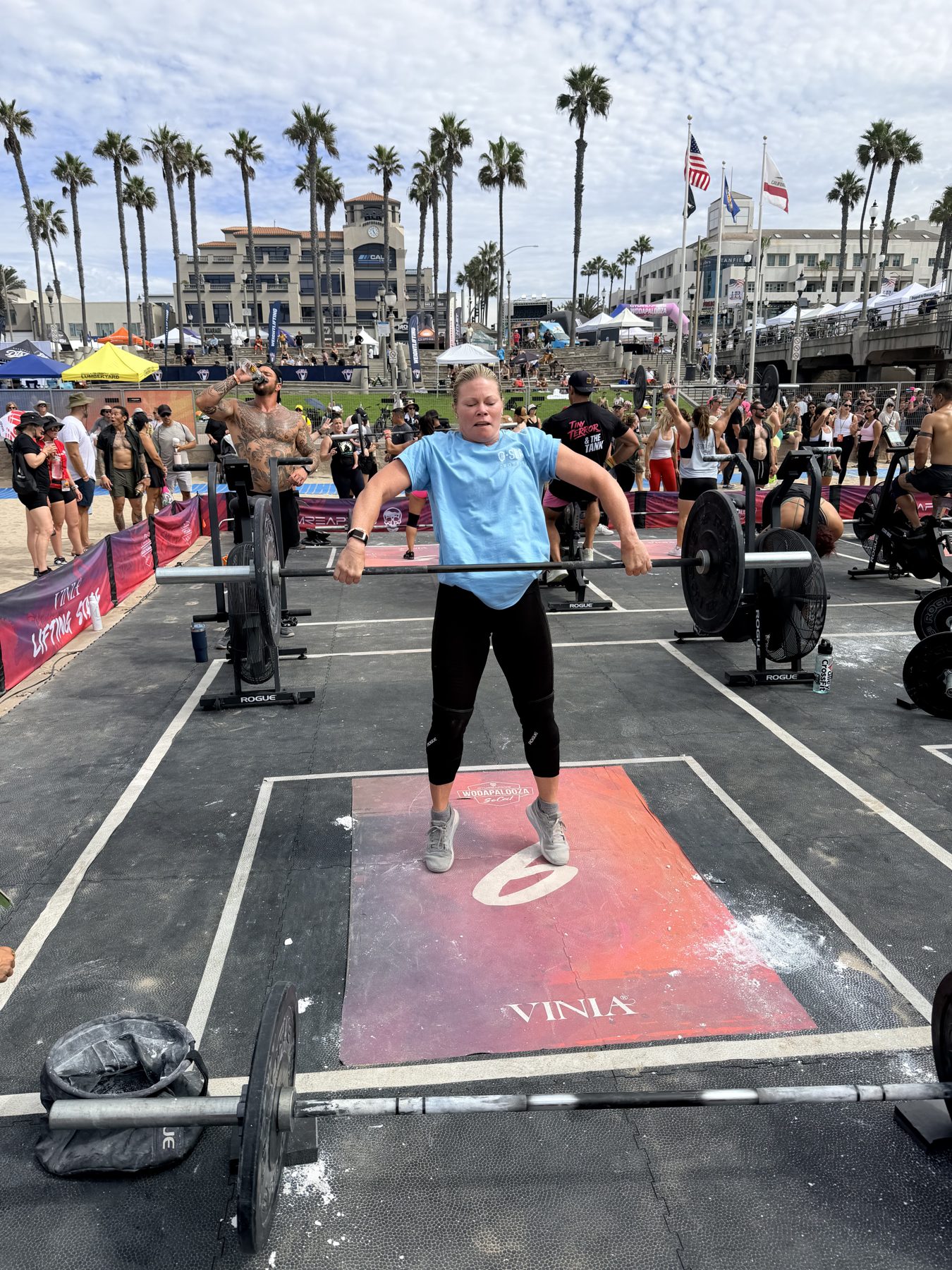
Power clean
Learn the power clean as a beginner: setup, the first pull, the jump, the catch in the front rack, common faults, and scaling from a PVC pipe to a loaded bar.
What the power clean is
The power clean is an Olympic weightlifting movement that takes a barbell from the floor to the front of the shoulders in one fast motion, catching it in a partial squat. It trains explosive hip and leg power, coordination and upper back strength. Beginners learn it in pieces, from the hang position with a PVC pipe or empty bar, before pulling from the floor.
Why it is in class
The power clean is in CrossFit because it teaches the body to produce force fast, starting from the legs and hips and passing through a strong back into the arms. It is the way you get a bar to your shoulders for thrusters, front squats and jerks in a workout, and it builds speed that slow strength work alone does not. In daily life the pattern looks like picking something heavy off the ground and getting it up to your chest in one go: a bag of dog food, a toddler, a box you then carry. Learning to lift with the hips and legs while the back stays flat, then moving your body quickly under the load, is a practical skill for staying strong and coordinated as you age.
Points of performance
What a good rep looks like, from setup to finish.
Start position
Feet about hip width, bar over the middle of the foot. Hands just outside the legs in a hook grip or regular grip. Hips higher than the knees, shoulders slightly in front of the bar, back flat and arms long. Chest up, eyes forward, lats squeezed to keep the bar close.
First pull to the knees
Push the floor away with the legs, letting the knees move back as the bar rises. The back angle stays the same and the bar brushes the shins. This part is controlled, not rushed. The shoulders stay over the bar until it passes the knees.
Jump through the hips
Once the bar reaches the upper thigh, extend the hips and knees as hard as you can, as if jumping, while the arms stay long. The bar should stay close and touch the hips. The heels may rise and the shoulders shrug at the very top.
Pull under and turn the elbows
After the jump, pull your body down under the bar by bending the arms and moving the elbows high and outside. Then whip the elbows around and forward so the bar lands on the front of the shoulders. The feet move slightly wider as you drop.
Catch and stand
Receive the bar in a quarter to half squat with heels down, chest up and elbows high in a front rack. Fingertips can loosen on the bar. Stand up fully to finish the rep. A rep counts with hips and knees open and the bar on the shoulders.
Common beginner faults, and the fix
Pulling with the arms early
What it looks likeThe elbows bend while the bar is still below the hips, and the lift becomes a reverse curl.
The fixKeep the arms long like ropes until the hips finish their jump. Practice hang muscle cleans and high hang cleans with an empty bar.
Bar swinging away
What it looks likeThe bar loops out in front of the body after the hips extend, and the lifter jumps forward to catch it.
The fixBrush the thighs and keep the bar close, lats tight. Cue: bar to the hips, then straight up.
Catching with low elbows
What it looks likeThe bar lands on the hands or the collarbones crash, elbows pointing down.
The fixSpin the elbows fast and high in the catch. Practice front rack mobility and drills where you hold the catch position.
Hips shooting up first
What it looks likeFrom the floor the hips rise before the bar moves, so the back pulls the weight.
The fixPush with the legs and keep the chest rising with the hips. Lighten the bar and pause just below the knee to feel the position.
Where you start, and where it goes
Every movement in class has a version that fits you today.
Start here
PVC pipe or dowel drills: the deadlift, the jump from the hang, the high pull and the front rack catch, each practiced alone.
Next step when: You can link the hang position, jump and catch in one smooth motion with the pipe.
Building
Hang power clean with an empty training bar or dumbbells, starting just above the knee.
Next step when: The bar stays close, the arms stay long until the jump finishes, and you catch with high elbows every rep.
Full movement
Barbell power clean from the floor, adding weight gradually in sets of 2 or 3.
Next step when: Your first pull keeps a flat back and the catch looks the same at moderate weights as it does with an empty bar.
Beyond
Heavier power cleans, the squat clean and cleans inside workouts like barbell cycling.
Next step when: Your coach programs it and you can keep form under fatigue as well as when fresh.
Learning it in your first classes
Your first exposure to the power clean is usually spread over several classes, starting with a PVC pipe and a lot of practice in the hang position. Coaches break it down: the deadlift, the jump, the shrug, the catch, then put the pieces together. Your coach watches whether your back stays flat, whether your arms bend too soon, and whether the bar stays close to your body. Expect to feel clumsy for a while; nearly everyone does. Tell the coach about back, wrist, elbow or knee history, and say if the front rack hurts your wrists. Stop if you feel sharp pain rather than effort, and if it lingers, check with a doctor or physical therapist.
What your first class at O-SEA CrossFit is like · How On-Ramp teaches the movements
Questions beginners ask
Can a beginner do power cleans in CrossFit?
Yes. Beginners learn the power clean in a coached class every day, starting with a PVC pipe or empty bar and practicing each part separately. The movement looks complex but is built from a deadlift, a jump and a front rack catch. With patient practice most people can power clean a light bar within a few weeks.
What is the difference between a power clean and a squat clean?
In a power clean you catch the bar in a partial squat, with the hips above the knees. In a squat clean, sometimes called a full clean, you catch the bar in a full front squat and then stand up. The power clean requires a higher pull, and the squat clean lets you lift heavier weights.
Why do my wrists hurt in the power clean catch?
Wrist discomfort in the power clean catch usually comes from low elbows, a tight front rack, or holding the bar in a death grip. The bar should rest on the shoulders, with the fingertips loosely under it. Work on rack mobility and tell your coach. If the pain stays, check with a doctor or physical therapist.
Should I use a hook grip for power cleans?
A hook grip, where the thumb is wrapped by the first two fingers, is common in Olympic lifting because it keeps the bar secure. It feels uncomfortable at first. Many beginners start with a regular grip on light weights and learn the hook grip once the movement makes sense. Your coach will show you both.
How heavy should a beginner power clean?
A beginner power clean should be light enough that the bar stays close, the arms stay long until the hips finish, and the catch is solid. For most people that starts with a PVC pipe and an empty training bar. Speed and position matter more than load, so weight comes slowly and only when the movement looks the same every rep.
Related movements
Learn the power clean with a coach beside you
Every class at O-SEA CrossFit is coached and every movement scales. Your first one is free.