
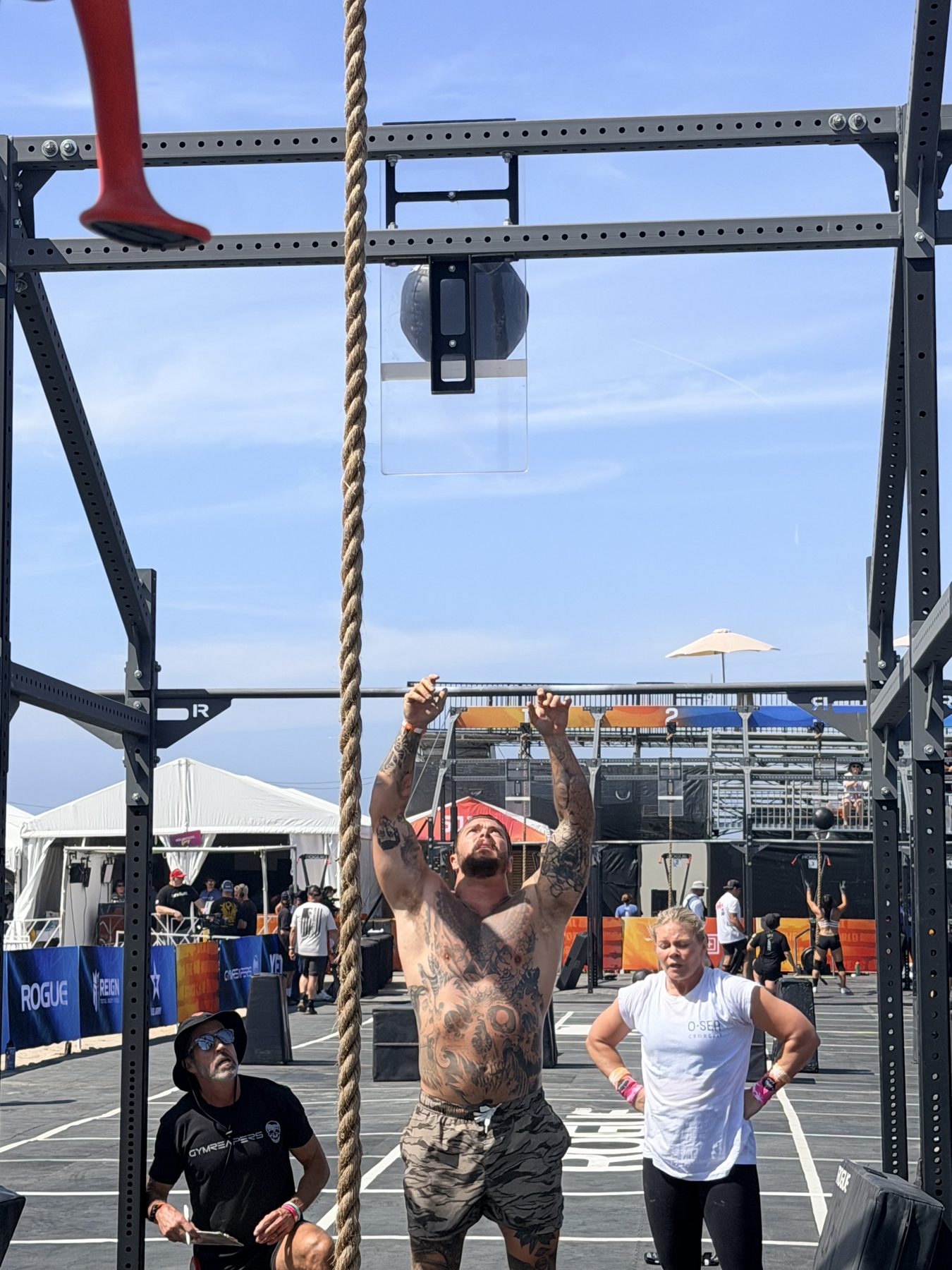
Pull-up
Learn the pull-up as a beginner: how to hang, pull and lower, the faults to avoid, and the ring row and band steps that build toward your first strict rep.
What the pull-up is
A pull-up is a gymnastics movement where you hang from a bar with straight arms and pull your body up until your chin clears the bar, then lower under control. It trains the back, arms, grip and midline. Beginners start with active hangs, ring rows and banded pull-ups while building toward a first strict rep.
Why it is in class
The pull-up sits in CrossFit because it is the cleanest test of how well you can move your own body with your upper body. Much of what happens in a gym is pushing: presses, push-ups, throwing a ball overhead. Pulling balances that out and builds the muscles across the upper back that hold your shoulders in a healthy position. Outside the gym, the strength shows up every time you haul yourself out of a pool, climb into the bed of a truck, lift a heavy bag down from a high shelf, or carry groceries without your shoulders rounding forward. The grip you build hanging on a bar also helps on almost every barbell and kettlebell day in the program.
Points of performance
What a good rep looks like, from setup to finish.
Full grip
Wrap your thumb around the bar and set your hands just outside shoulder width, palms facing away. A full grip keeps you on the bar when your hands get tired. Hang with arms long and feet off the floor before anything else happens, so every rep starts from the same dead hang.
Shoulders engaged
Before you bend the elbows, pull your shoulders down away from your ears as if tucking them into your back pockets. Your body rises an inch with straight arms. This active hang protects the shoulder joint and gets the big back muscles working before the arms join in.
Ribs down, legs together
Squeeze your legs together, point the toes slightly forward and keep the ribs tucked so your body forms a gentle hollow shape. A tight body swings less and travels straight up. A loose body wastes effort and makes the pull feel heavier than it really is.
Drive the elbows down
Think about pulling your elbows down toward your hips rather than pulling your chin up. That cue recruits the lats instead of only the arms. Keep pulling until your chin is clearly above the bar, with the neck neutral rather than craning forward to reach it.
Lower all the way
Come down under control until your arms are fully straight again. The lowering half builds strength and keeps the rep honest. In a standard workout, a pull-up counts when the chin passes over the bar and the arms reach full extension at the bottom.
Common beginner faults, and the fix
Chin chasing
What it looks likeThe head juts forward and up to sneak the chin over the bar while the body is still well below it.
The fixKeep your gaze level and pull until the bar is near your upper chest. If the chin cannot clear without reaching, use a band that lets you finish honestly.
Half reps at the bottom
What it looks likeThe elbows stay bent between reps, so the athlete never returns to a full hang.
The fixPause for a breath at the bottom with arms straight before each pull. Your coach may count it out loud so the habit sticks early.
Shrugged shoulders
What it looks likeThe ears disappear into the shoulders at the start and the pull begins with the arms alone.
The fixPractice scap pull-ups: hang, pull the shoulders down, relax, repeat. Then start every full rep with that same small move.
Wild swinging
What it looks likeThe legs kick and the body swings like a pendulum with no timing or control.
The fixSqueeze the glutes and legs together, slow down and keep it strict until your coach teaches the kip as its own skill.
Where you start, and where it goes
Every movement in class has a version that fits you today.
Start here
Ring rows with the feet on the floor and the body at an angle, plus active hangs from the bar for time.
Next step when: When you can do several sets of controlled ring rows with your body close to horizontal and hang steadily for about half a minute.
Building
Banded pull-ups with a resistance band looped over the bar under a foot or knee, and slow negative pull-ups lowering from a box.
Next step when: When a thinner band still lets you finish clean reps with full range, and you can lower yourself slowly from the top.
Full movement
Strict pull-ups from a dead hang to chin over the bar, unassisted.
Next step when: When you own several strict reps in a row, your coach may teach the kip so you can link reps efficiently in workouts.
Beyond
Kipping and butterfly pull-ups, chest-to-bar pull-ups, and weighted strict pull-ups for strength.
Next step when: Keep strict strength growing alongside these, and add volume gradually so the shoulders and hands adapt.
Pull-up in real classes
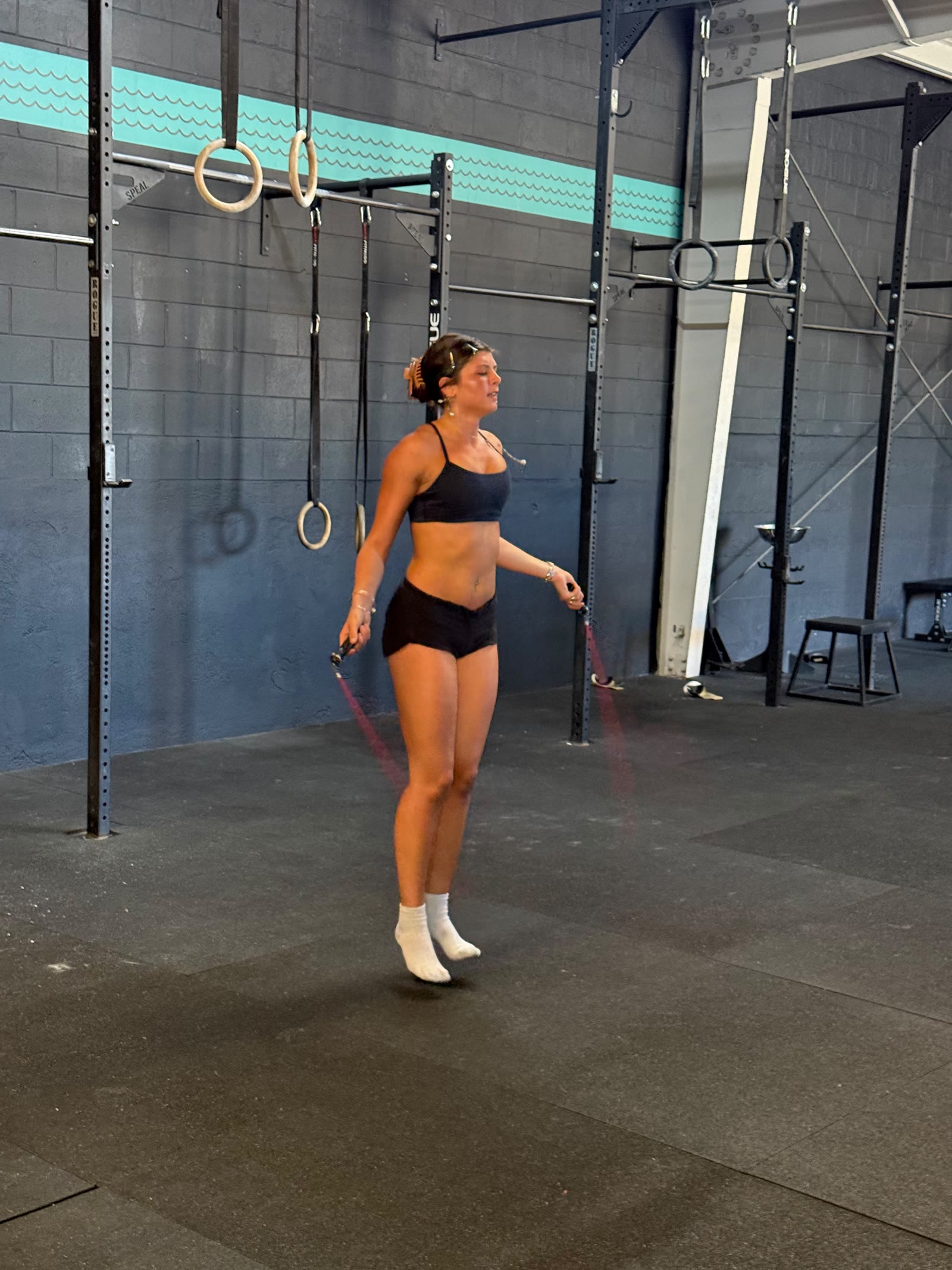
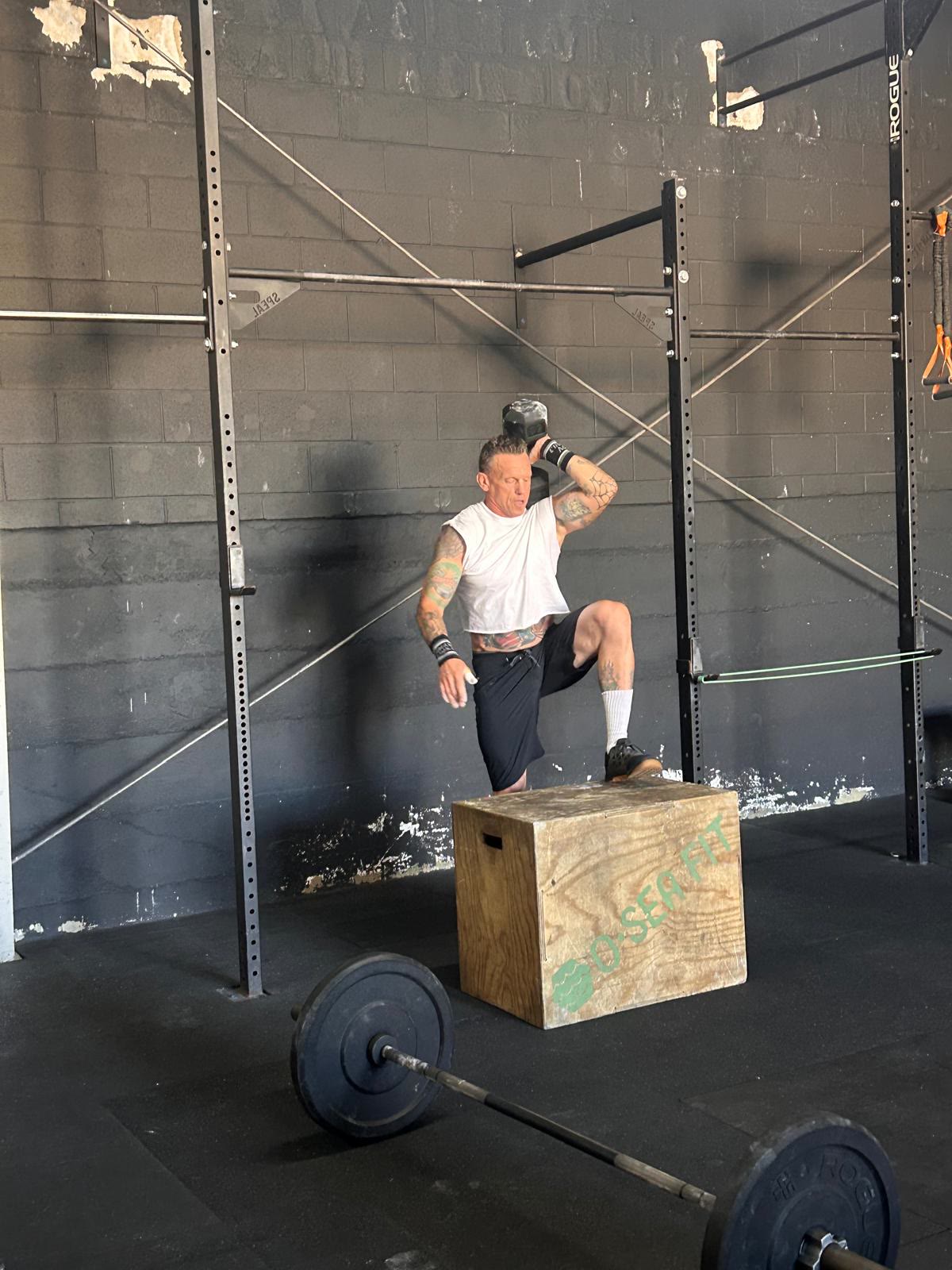
1 video and 2 photos from the gym floor in San Clemente, shared by our coaches and members.
Learning it in your first classes
Your first coached classes with the pull-up usually start at the bar, not with reps. Your coach will have you hang, find your grip and try a few scap pull-ups to see how your shoulders move. From there they will pick a ring row angle or a band that lets you complete honest reps with full range. Expect them to watch whether you reach a full hang at the bottom, whether your shoulders stay out of your ears and whether you finish without straining your neck. Tell the coach about any past shoulder, elbow or wrist trouble before you hang, and let them know if your hands start to tear or ache.
What your first class at O-SEA CrossFit is like · How On-Ramp teaches the movements
Questions beginners ask
How long does it take a beginner to get a first strict pull-up?
There is no fixed timeline for a first strict pull-up. It depends on your starting strength, body weight and how consistently you train pulling. Adults who practice ring rows, hangs and negatives a few times a week see steady progress. Measure it by thinner bands and lower ring row angles, and the first strict rep tends to follow.
Is a banded pull-up cheating?
A banded pull-up is not cheating. It is a scaled version that lets you train the full pull-up pattern with the right range of motion while the band carries part of your weight. The goal is to move to thinner bands over time. It beats grinding out half reps without help, which only teaches poor habits.
What is the difference between a strict and a kipping pull-up?
A strict pull-up uses only pulling strength from a still hang. A kipping pull-up uses a rhythmic swing from the hips and shoulders to help lift the body, which lets athletes do more reps in a workout. Coaches build strict pull-up strength first because the kip loads the shoulders hard and needs that foundation.
My hands hurt after pull-ups. Is that normal?
Some soreness and calluses on the palms are normal when you start doing pull-ups. Tears are not something to push through. Keep calluses filed down, use chalk and stop a set if a hot spot forms. If the pain sits in the elbow or shoulder rather than the skin, tell your coach and consider checking with a doctor or physical therapist.
Do I need to lose weight before doing pull-ups?
You do not need to lose weight before starting pull-up training. Every scaled version, from ring rows to banded pull-ups, is built so any body can train the pull-up pattern today. Strength grows from the training itself. Your coach adjusts the angle or the band so the work fits you right now.
Related movements
Learn the pull-up with a coach beside you
Every class at O-SEA CrossFit is coached and every movement scales. Your first one is free.