
What scaling actually means
Scaling is not the beginner version of a workout. It is how the same session is made to fit whoever is in the room, including the people who have been there years.
Scaling is the single most misunderstood word in a CrossFit gym, and the misunderstanding is what keeps people out.
Most people hear it as: there is the real workout, and there is the easier one they will give you. That is not what it is.
One workout, many versions
The session written on the board is one shape: a set of movements, a number of rounds, a time frame. What changes person to person is the load, the range of movement, and sometimes the movement itself. The shape stays.
So two people finishing the same workout may have lifted weights an order of magnitude apart and done two different versions of the same skill. Both did the workout. That is the design, not a concession.
The three things that get changed
- Load: a lighter bar, dumbbells instead of a barbell, or no weight at all while the movement is learned.
- Volume: fewer rounds or fewer reps, so the session still finishes inside the time it was built for.
- Movement: a ring row instead of a pull-up, a box step instead of a jump, a squat to a target instead of below it.
The third is the one that matters most for somebody new, because it is what lets you train the same pattern today that you will do properly in six months.
Who else is scaling
Almost everybody, most days. Somebody managing a shoulder scales overhead work. Somebody who competed at the weekend scales everything. Somebody in their first week scales nearly all of it. The room does not read any of that as a ranking, because on a different day it is a different person.
How the decision gets made
A coach watches the warm-up, asks what hurts, and suggests a version. You can say no. If a movement feels wrong mid-session, stopping and asking is the correct response, not a failure of nerve.
A good scale leaves you working about as hard as everybody else and finishing at roughly the same time. If you finish enormously early or are still going long after the room has cleared, the scale was wrong and that is a coaching miss, not yours.
Where this does not help
Scaling manages load and range. It does not manage a diagnosis. If something is injured or recently operated on, the useful order is clinician first, then a conversation with a coach about what you have been cleared to do. A scaled version of a movement you have been told to avoid is still that movement.
It also does not fix a session that is wrong for your goal. If you want to get better at one specific thing by a specific date, that is a program, and it is worth saying so rather than scaling a general class toward it.
The short version
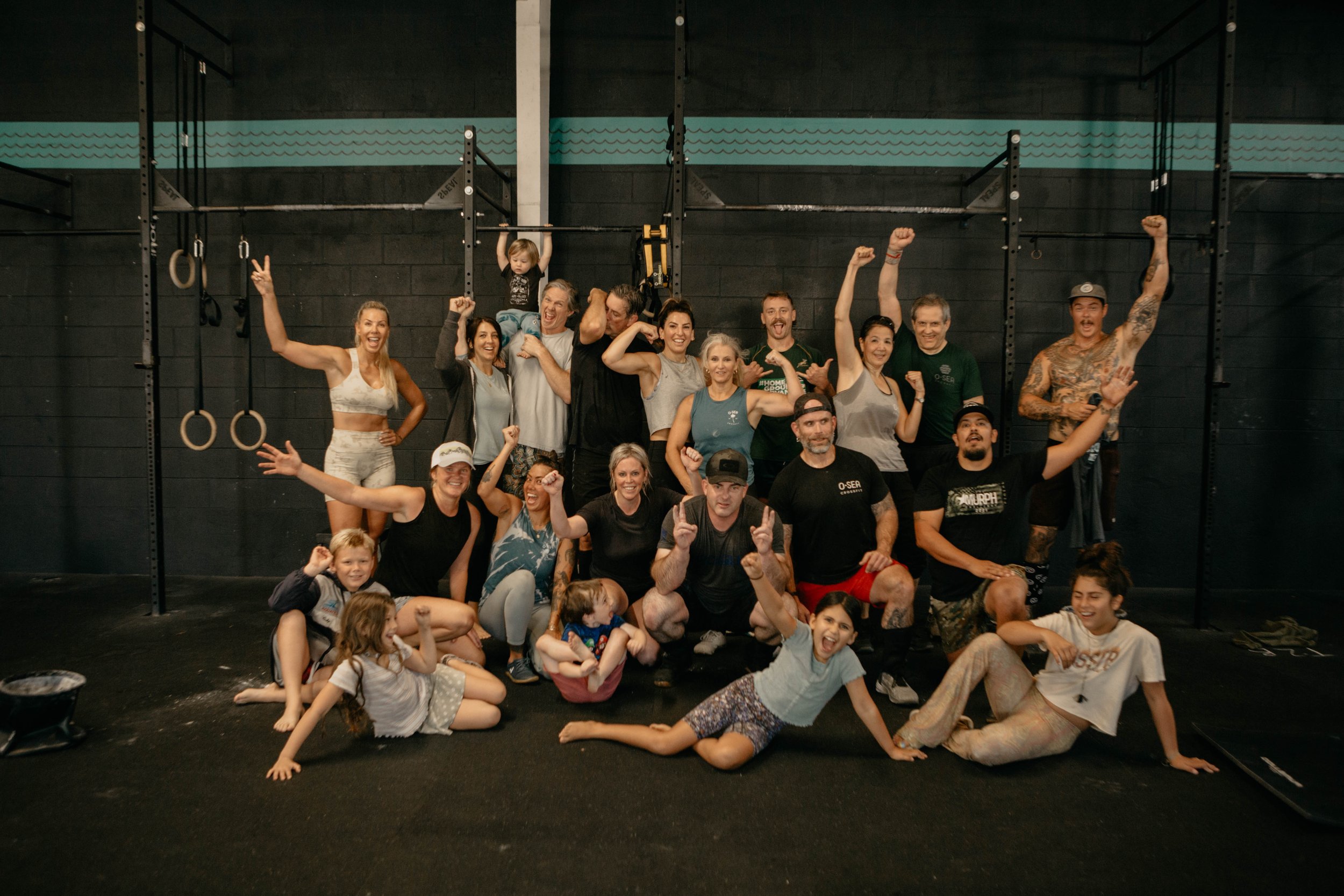
Scaling is not the lesser workout. It is the reason one class can hold somebody in week one and somebody in year six without either of them wasting the hour.
Common questions
Is scaling only for beginners?
No. Most of the room scales something on most days, including people who have trained for years.
Will I be told what to scale to?
A coach will suggest a version based on the warm-up and anything you have said hurts. You can decline it.
How do I know the scale was right?
You finish around the same time as the room and worked about as hard. Finishing far too early or far too late means it needs adjusting.
Come and see for yourself
A conversation costs nothing and answers more than any page.