
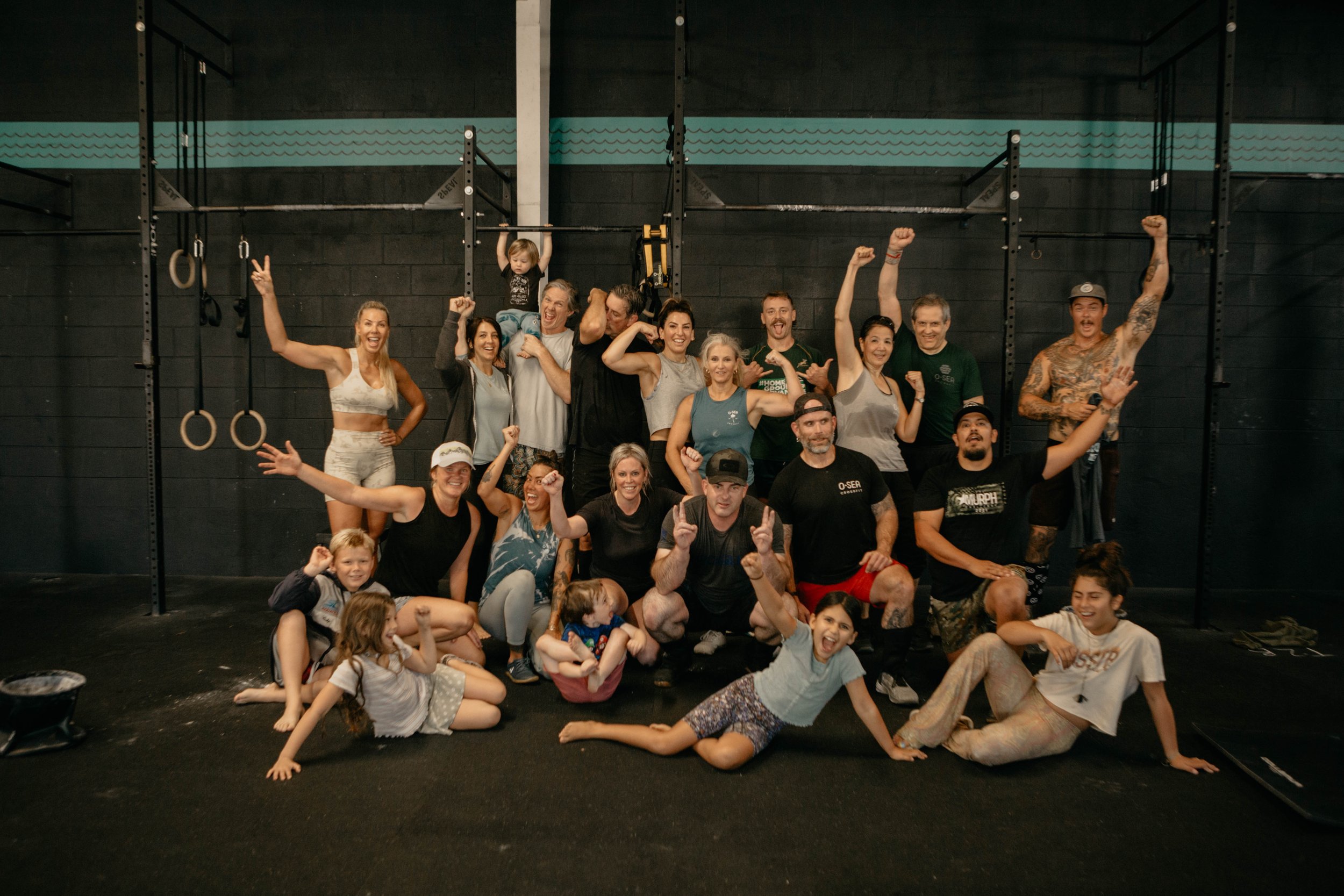
When a CrossFit community works against a beginner
Group energy is the reason most members stay. In a few specific situations, it is also the thing that hurts a new member. Here is where it goes wrong, and what to do instead.
The same force pushes both ways
Every gym that sells community, including this one, has a reason to describe it as purely good. It is not. The encouragement, the shared whiteboard and the people who notice when you are missing are what turn a few classes into a habit. Those same forces can pull a new member past their limits, tie their attendance to other people, or keep them from asking for help they actually need.
If you are starting CrossFit as a beginner, knowing these failure points in advance is worth more than any amount of reassurance. Each one below has a simple fix, and every fix starts with you saying something out loud to a coach.
1. You match the room instead of your own scale
The most common way beginners get hurt or discouraged has nothing to do with the workout itself. It is the person on the next rower. When the clock is running and the room is loud, it is natural to pick up the pace, add weight to match someone else, or skip the scaled option because nobody else seems to be using it.
Scaling is not a lesser version of the class. It is the class, adjusted so the intended effect lands on your body today. For your first weeks, a good target is finishing a workout feeling like you had a little more in reserve. Tell the coach before class starts that you are new and want to stay conservative. It is much easier for a coach to hold you back when they know that is the plan.
2. Soreness gets treated as a badge
Group culture can turn extreme soreness into a story people trade. Some soreness after a new kind of training is normal, and it usually peaks a day or two later and fades within a few days. Pain that goes well beyond that is not a rite of passage.
Sudden, high volume exercise after a period of inactivity is a known cause of rhabdomyolysis, a condition where damaged muscle releases proteins that can harm the kidneys. Warning signs include dark or cola colored urine, significant swelling, and muscle pain far out of proportion to the workout. Any of those is a reason to get medical care the same day, not to post about it. The best prevention is the first point on this page: do less than the room for the first few weeks.
3. Your attendance depends on one class time
Many members find their people in one specific class, the early crew or the noon regulars. That is great until a job changes, a coach rotates, or your friends move to a different hour. People whose whole reason for showing up lives in one time slot often drift away when that slot changes, and they rarely notice it happening.
A practical fix: in your first month, take classes at two different times. You will learn more faces, you will see more than one coach, and your habit will not rest on a single group of people.
4. You need something a group class cannot give
A group class coach is splitting attention across everyone in the room. That works well for most beginners. It is not the right starting point if you are returning from a recent surgery, managing an active injury, pregnant with complications, or living with a medical condition that affects how hard you can safely work.
In those cases, get clearance from your doctor first, and be specific with the coach about what you have been told. Sometimes a physical therapist or a slower individual start belongs ahead of group classes. A community that is welcoming should never make you feel you have to hide a limitation to fit in.
5. The social side quietly replaces the training
Some members come for the people and stop progressing without realizing it. They show up, chat, finish the workout and leave, month after month, at the same weights. If belonging is your main goal, that is a perfectly good reason to train. If you also want to get stronger, say so, and ask a coach what to track.
What this means for your first month
None of these are reasons to avoid a community gym. They are reasons to start with a plan: tell the coach you are new, scale down on purpose, try two class times, be honest about your health history, and name one thing you want to improve. The On-Ramp and the first class guide cover the movements and logistics. This page covers the part people usually learn the hard way.
Talk it through before your first class
Book a free consultation, tell a coach your history and your goals, and start at the pace that is right for you.