
CrossFit class etiquette for beginners
Every CrossFit class runs on a handful of habits nobody posts on the wall. Here they are, start to finish: before the warmup, around the barbells, during the workout, and after the clock stops.
Etiquette is the one skill you can master on day one
New members spend a lot of energy worrying about fitness: whether they can keep up, whether they will finish last. Etiquette is a different kind of skill. It has nothing to do with how strong or fast you are, and almost all of it comes down to two things: keeping the people around you safe, and respecting their time. A member in their first week can do every item on this page as well as someone who has trained for ten years. That is a fast way to feel like you belong in the room.
Before the class starts
- Arrive a few minutes early. The coach usually explains the workout and the scaling options at the start. Walking in during that briefing means guessing at the plan.
- Tell the coach you are new. Also mention any injury or movement that bothers you, every time, even if you said it last week. Coaches rotate, and the person leading today may not have heard.
- Learn one name. Introduce yourself to the person setting up next to you. One familiar face makes the second class easier to walk into.
- Leave set equipment alone. If a barbell, box or rower already has someone's water bottle or towel by it, it is taken. Grab your own, or ask.
Around the barbells
This is where etiquette is mostly about safety, and where it matters most.
- Give every bar a clear zone. Set up with enough room in front, behind and to the sides that a missed lift lands on open floor, not on a person. If you are unsure how much space you need, ask the coach to check your spot.
- Never walk through someone's lifting space. Walk around the edges of the room, especially behind or in front of anyone with a bar overhead or on their back. They may not see you, and they cannot stop a lift halfway to let you pass.
- Do not drop an empty bar. Bumper plates are built to absorb a drop. A bare bar is not, and letting it fall can damage the bar, the collars and the floor. Lower it under control.
- Ask how this box handles dropping. Rules about dropping dumbbells, kettlebells or a loaded bar from overhead vary from gym to gym. The coach will tell you what is expected here.
During the workout
- Count every rep honestly. A rep that does not reach full range does not count, and you are the one keeping track. Nobody minds a slow score. An inflated one gets noticed.
- Stay in your lane. When the class shares a running route or a line of rowers, keep to your own path and do not cut across someone else's.
- Leave the coaching to the coach. Telling another member how to fix their form, even kindly, can confuse the cue they were just given. If you see something unsafe, tell the coach.
- Cheering is welcome. Noise during a workout is part of CrossFit. Encouragement, a called rep count or a name shouted across the floor are all fair game.
When the clock stops
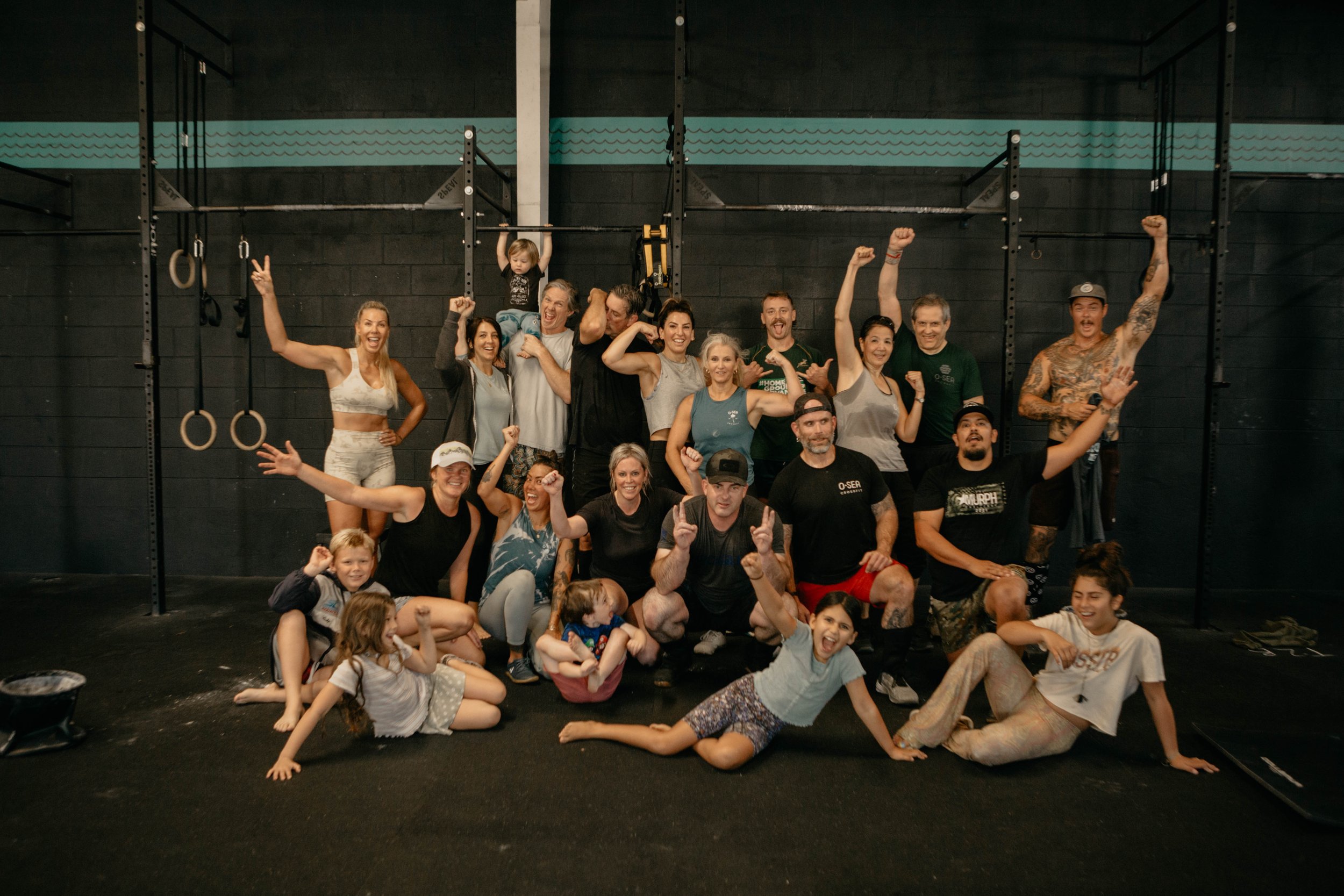
In many CrossFit gyms, members who finish early cheer on the people still working, and finishing last often earns the loudest support in the room. If you are done, stay on the floor rather than heading straight for your phone or your car. If you are the one still working, the noise is for you.
Then put everything back where it came from. Strip your plates and return them to the rack by weight, hang the bar or return it to its spot, and wipe down anything you sweated on. Sweep up spilled chalk. The next class starts on time only if this one leaves the floor ready, and new members who clean up without being asked are noticed quickly by coaches and regulars alike.
Finally, record your score the way the class does it, whether that is the whiteboard or an app, and write down the scaling you used. A score with its scaling attached is useful to you next time and honest to everyone reading it.
What you can stop worrying about
Asking questions is part of the etiquette, not a break from it. Asking the coach to explain a movement twice, choosing a lighter weight, or taking extra rest are all normal in a coached class. The habits above are what members notice. Your finishing time is not. The first class guide walks through the rest of what to expect when you come in.
Talk it through before your first class
Book a free consultation, tell a coach your history and your goals, and start at the pace that is right for you.